Socializing a English Bulldog With Kids, Dogs and Strangers
General training information. Every dog is an individual; for health or behavior concerns, see your veterinarian.
Good English Bulldog socialization is mostly about calm, pleasant repetition. You are teaching your dog that new people, new dogs and new places are ordinary and nothing to worry about.
This guide walks through a plan you can follow at home. It covers kids, other dogs and strangers, with short steps and honest notes about where Bulldogs can be tricky. For the wider picture, see our complete guide to training an English Bulldog.
What to Know About the Breed First
The American Kennel Club and the Westminster Kennel Club list the breed simply as the Bulldog. Most people say English Bulldog, so we use both names here.
The Westminster Kennel Club describes the temperament as fun-loving, affectionate and well-rounded, and calls the breed outgoing, playful, smart and friendly. It rates trainability 4 out of 5 and barking 2 out of 5. That is a good starting point for a social dog.
Individual dogs vary. Your puppy may be bolder or shyer than the breed description suggests, so watch your own dog rather than the label.
Are English Bulldogs Good With Kids?
Many families ask this first. The Westminster Kennel Club rates the breed 3 out of 5 for good with children. PetMD says Bulldogs are typically friendly and good with children.
Read that as encouraging, not as a promise. A middling rating means the dog and the children both need coaching. Supervision and clear house rules matter more than the breed name.
The Orvis Bulldog breed page also notes that Bulldogs can be stubborn and may show dominance over family members or other pets. You do not fix that with harsh handling. You prevent it with structure, calm routines and rewards for good choices.
What You Will Need
- Small, soft treats you can break into tiny pieces. PetMD advises limiting treats during training to avoid weight gain, so count them as part of the daily food.
- A leash and a well-fitted collar or harness. Ask your veterinarian what fits a short-nosed dog comfortably.
- A treat pouch so rewards are always within reach.
- A baby gate or exercise pen for breaks and separation.
- A mat or bed that becomes your dog's calm spot.
- Fresh water and shade. Heat intolerance is a real concern in this breed, according to PetMD.
- A notebook to log what went well and what worried your dog.
Step-by-Step Socialization Plan
Step 1: Check health and vaccine timing with your veterinarian
Before you take a young puppy to public places or other dogs, ask your veterinarian which outings are safe and when. Health questions belong with them. Until they say otherwise, start with people and sounds at home.
Step 2: Build a calm base at home
Teach your dog to settle on a mat for treats and quiet praise. Practice sit, name response and walking on a loose leash. Our complete training guide covers these basics.
Keep sessions short. Orvis advises short sessions with praise and rewards, and PetMD says positive reinforcement works best. A tired or overheated Bulldog learns poorly, so end while your dog is still keen.
Step 3: Introduce strangers one at a time
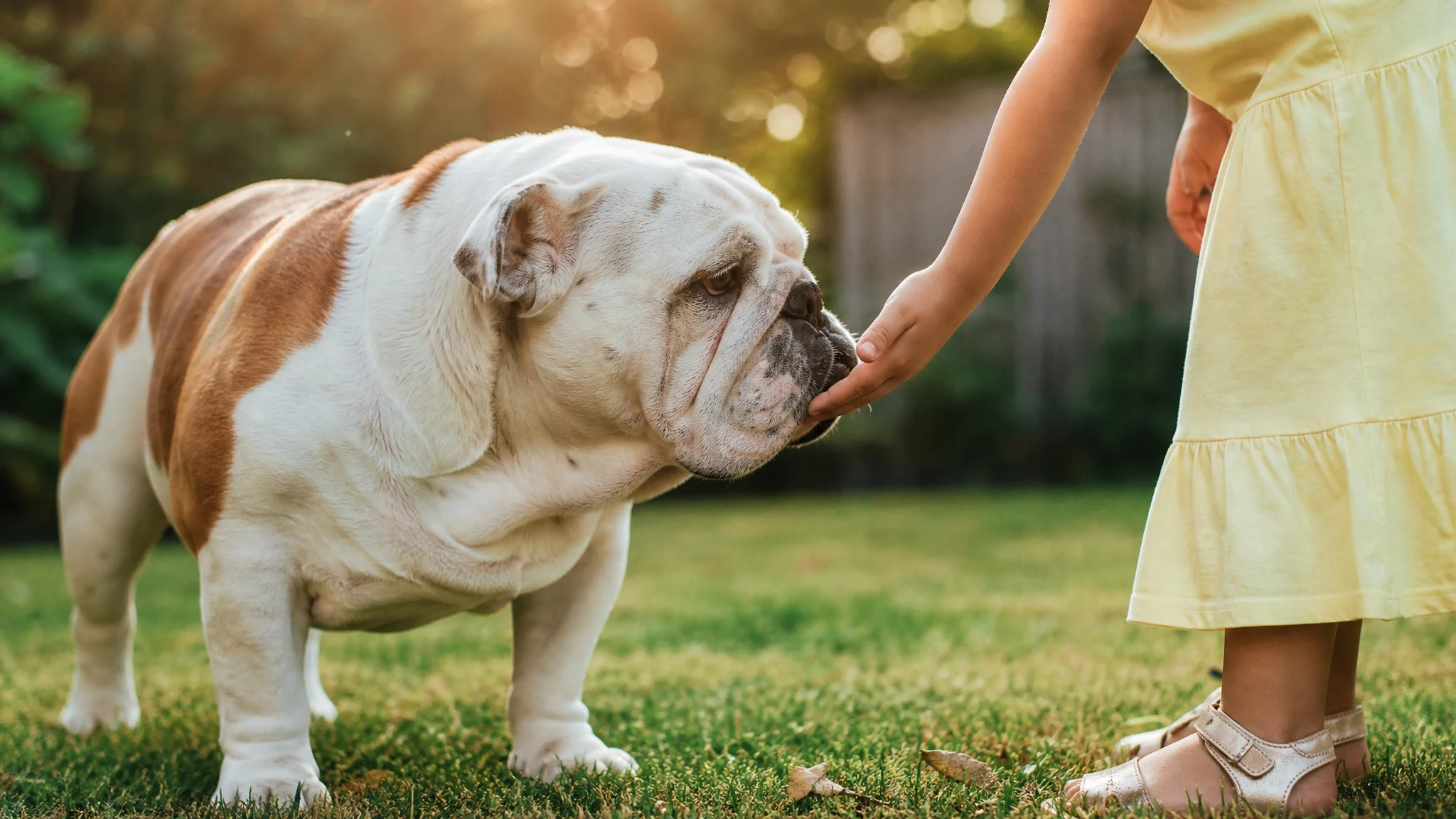
Start with a calm adult in your living room. Ask the visitor to ignore your dog at first, then to offer a treat on a flat palm, low and to the side. No looming, grabbing or kissing.
Let your dog choose to approach. If your dog backs away, the visitor stays still and you reward any curiosity from a distance. Repeat with different people, hats, glasses, uniforms and walking sticks over several weeks.
Step 4: Take it outside in cool, short trips
PetMD describes the right exercise as gentle: short leashed walks in a cool environment, nothing strenuous. Orvis says a 20-minute walk is usually enough.
Use that as your frame. Pick cool mornings or evenings, sit on a bench and let your dog watch people pass. Reward calm looks. Stay at a distance where your dog can still take treats, since refusing food is a sign they are too stressed.
Step 5: Introduce children with rules and supervision
Set the rules for the kids before the dog is in the room:
- Pet gently on the shoulder or chest, not the face or tail.
- Never hug, climb on or lie on the dog.
- Leave the dog alone when it is eating, chewing or sleeping.
- Let the dog walk away without being followed.
Keep early sessions to a few minutes. Have the child sit on the floor and toss a treat or offer one from a flat hand, while you hold the leash. Praise the dog for staying relaxed.
Always have an adult actively watching, not just in the same room. When you cannot watch, use a gate or pen. Even a friendly dog and a friendly child can have a bad moment.
Step 6: Introduce other dogs slowly
The sources we rely on do not give a rating for how English Bulldogs do with other dogs. Check with the Bulldog Club of America or your breeder about what is typical, and treat your own dog as an individual.
Orvis mentions possible dominance over other pets, so go slowly and plan each meeting:
- Choose a calm, vaccinated, well-mannered adult dog and a neutral, shaded space.
- Walk both dogs on leash, parallel and at a comfortable distance. Reward each for looking at you.
- Close the gap gradually over several walks if both dogs look loose and relaxed.
- Allow a brief, loose-leash sniff, then call your dog away and reward.
- End the meeting while it is going well.
Skip dog parks while your dog is learning. A crowded park gives you little control over who your Bulldog meets. Watch for stiff posture, hard staring, freezing or guarding of toys and people. If you see those, add distance and end the meeting calmly.
Step 7: Practice at home with the dogs and people who live there
If you already have a dog or cat, manage food, toys and favorite resting spots. Feed separately and pick up high-value chews when others are near. Reward calm behavior when the pets share a room.
Step 8: Keep the practice going
Socialization is not a one-time window. Keep up regular, easy outings and visitors through your dog's life. Rotate people, places and surfaces so each one stays pleasant and a little different.
Tips for Better Results
- Pay your dog for the behavior you want, quickly and often.
- Use tiny treats and trim meals to match, since Bulldogs gain weight easily. PetMD lists obesity among the common health issues in the breed.
- Watch the temperature. A hot, panting dog is not in a state to learn.
- Let your dog take breaks. Quiet time in a pen is part of the plan.
- Be patient with stubbornness. Orvis notes it as a known trait, so make the reward worth the effort and keep sessions short.
- Teach children that the dog's body language matters: a turned head, yawning, lip licking or walking away all mean "enough."
Common Mistakes to Avoid
- Flooding. Dragging a nervous dog into a crowd teaches fear, not confidence.
- Letting strangers rush in. Ask people to wait and let your dog approach.
- Trusting the breed label with kids. A 3 out of 5 rating from the Westminster Kennel Club means supervision is still needed.
- Using harsh corrections. The American Veterinary Society of Animal Behavior (AVSAB) supports reward-based training. Shock, prong or choke collars, alpha rolls, scruffing and dominance methods can increase fear and aggression, so we never suggest them.
- Skipping the heat plan. Overheating can quickly turn a fun outing into a health emergency for a short-nosed breed. Call your veterinarian if you are worried about your dog's breathing.
- Overdoing treats. Use part of the daily meal as rewards where you can.
Expected Results
With steady practice, many Bulldogs become more relaxed around visitors, children and other dogs. You may notice your dog recovering faster after a surprise, taking treats in new places and settling on the mat when guests arrive.
Progress varies by dog and by home, and some dogs stay reserved with strangers or selective with other dogs. If your dog shows growling, snapping, stiffening or guarding around children or other pets, stop the exercise, keep everyone safe and ask your veterinarian about a referral to a qualified reward-based trainer or behavior professional.
A Simple Weekly Routine
- Daily: two or three short mat and treat sessions at home.
- Several times a week: one visitor visit, one short cool-weather outing.
- Weekly: one planned, supervised meeting with a calm dog or child, and a note in your log.
Small, happy repetitions add up. Your Bulldog will let you know when to speed up or slow down.