How to Train a English Bulldog: The Complete Guide
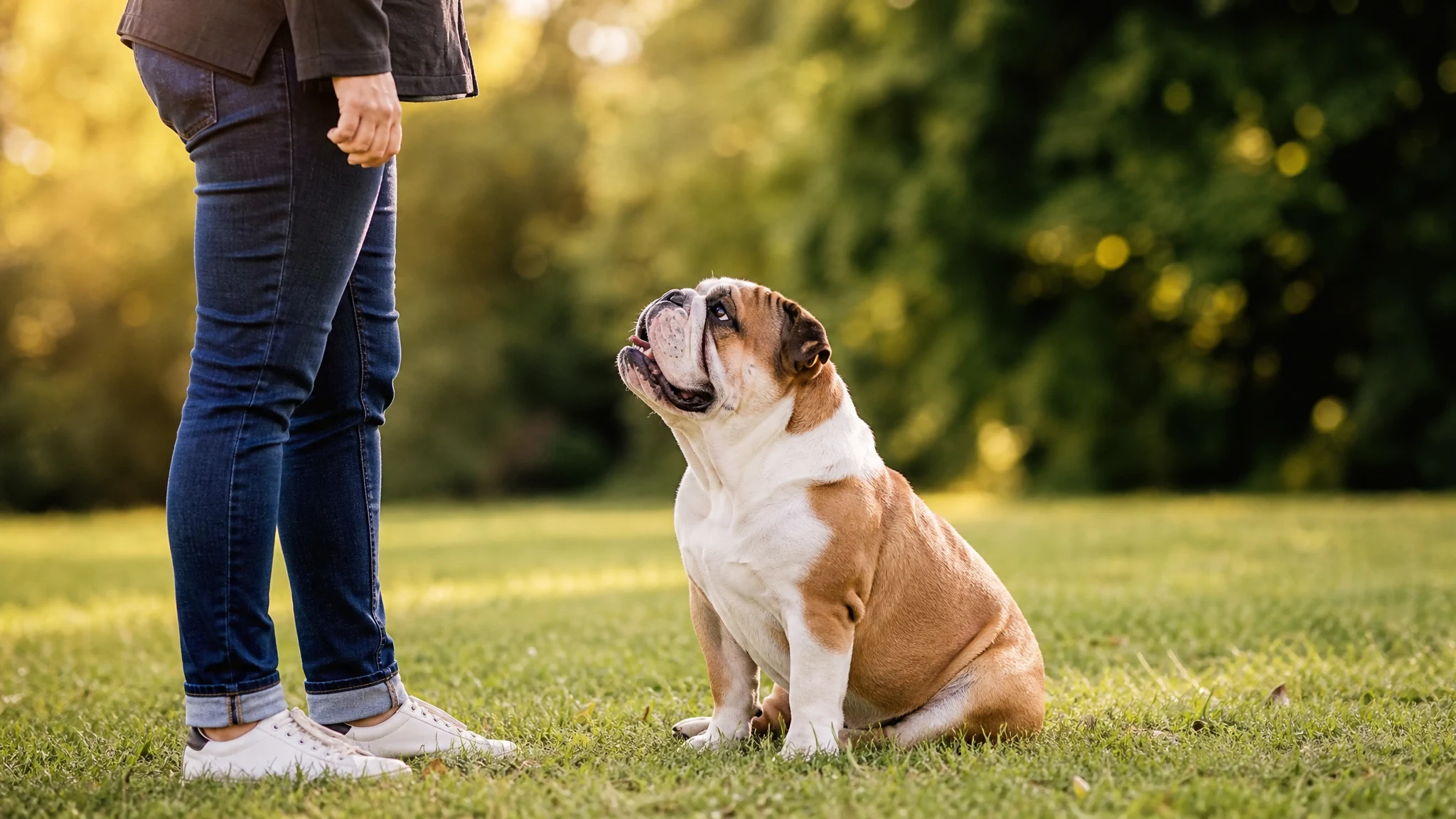
General training information. Every dog is an individual; for health or behavior concerns, see your veterinarian.
English Bulldog training is a different job from training a collie or a retriever. This is a breed with a bull-baiting past, a calm modern temperament, a short muzzle and a body that overheats. All of that shapes how you teach, how long you teach and what you use as a reward.
This guide walks through how to train an English Bulldog from puppyhood to adulthood. It covers where the breed came from, what motivates it, how to build each stage, how to exercise body and brain without risk, and which challenges to plan for. Every dog is an individual, so treat the breed notes as a starting point and not a promise.
A quick note on names. The Westminster Kennel Club lists the breed simply as the Bulldog, not the English or British Bulldog. People still say English Bulldog all the time, so that is the name used here.
Key Takeaways
- The Westminster Kennel Club says the breed was originally used for bull baiting. Today it is described as fun-loving, affectionate and well-rounded.
- PetMD says positive reinforcement works best for Bulldogs, and that treats should be limited during training to avoid weight gain.
- Keep sessions short. Orvis advises short sessions with praise and rewards.
- Exercise should be gentle. PetMD recommends short leashed walks in a cool environment, not strenuous activity.
- Plan for stubbornness and heat intolerance. Orvis names stubbornness as a known challenge, and PetMD flags heat intolerance in this brachycephalic breed.
- Health questions, including breathing trouble, belong with your veterinarian, not with a training plan.
Table of Contents
- What the English Bulldog Was Bred For, and Why It Matters
- The Training Foundation: Methods and Mindset
- Training Stages From Puppy to Adult
- Motivation That Works for This Breed
- Exercise and Mental Work
- Challenges to Plan For
- Sports, Jobs and Health Screening
What the English Bulldog Was Bred For, and Why It Matters
The Bulldog Club of America traces the breed to 13th-century England. The Westminster Kennel Club says the dog's original purpose was bull baiting. That history is a long way from the dog on your couch, but it explains a few things people notice in the breed.
Today the Westminster Kennel Club describes the Bulldog's temperament as fun-loving, affectionate and well-rounded, and also as outgoing, playful, smart and friendly. PetMD says the breed is typically friendly and good with children. Westminster rates the breed 3 out of 5 for good with children, so supervision and teaching both kids and dog how to behave still matter.
The breed at a glance
These figures come from the Westminster Kennel Club and PetMD. The American Kennel Club page was not available to us, so none of these are AKC figures.
| Trait | What the sources say | Source |
|---|---|---|
| Group | Non-Sporting | Westminster Kennel Club |
| Height | 14 to 15 inches at the shoulder (Westminster gives a maximum of 15 inches) | PetMD, Westminster |
| Weight | 40 to 50 pounds | PetMD |
| Life expectancy | 8 to 10 years | PetMD |
| Energy level | 3 out of 5 | Westminster Kennel Club |
| Trainability | 4 out of 5 | Westminster Kennel Club |
| Barking level | 2 out of 5 | Westminster Kennel Club |
| Shedding | 3 out of 5 | Westminster Kennel Club |
The Westminster Kennel Club gives a trainability rating of 4 out of 5. That is encouraging, but it is not the whole picture. Orvis, a retailer and a secondary source, describes the breed as stubborn and not highly intelligent. Those two views can both be true. A dog can be trainable and still decide that a cool kitchen floor beats your recall lesson.
The practical takeaway is simple. Expect a willing, people-oriented dog who may need you to make the right choice more rewarding than the wrong one. Expect to repeat things. Expect to stay patient.
The Westminster and PetMD pages do not say how the Bulldog gets along with other dogs, so check with the Bulldog Club of America or a reputable breeder if that matters for your household. Do not assume it either way.
The Training Foundation: Methods and Mindset
The best English Bulldog training tips start with the method. This site follows the position of the American Veterinary Society of Animal Behavior (AVSAB): training should be humane and reward-based.
PetMD says positive reinforcement works best for the Bulldog. That means you reward behavior you like so the dog is more likely to repeat it. It also means you skip the harsh stuff.
What to leave out
- No shock, prong or choke collars.
- No alpha rolls or scruffing.
- No dominance-based methods.
These tools and techniques can cause fear and pain, and they can damage trust. They are also a poor fit for a short-muzzled breed with breathing concerns, where anything that pressures the neck or causes stress is a bad idea. If a trainer suggests them, find a different trainer.
Orvis mentions possible dominance over family members or other pets. You do not answer that with force. You answer it with clear, consistent house rules, calm handling, and rewards for polite behavior. A dog who earns attention by sitting learns faster than a dog who is pinned for pushing.
The mindset that helps
Think of training as a long conversation, not a set of commands. Keep your tone upbeat. Mark the right behavior quickly with a word like "yes," then deliver the reward. Keep your own frustration out of the room. If a session goes badly, end it on something easy the dog can win.
Consistency matters more than intensity. Everyone in the home should use the same cues and the same rules. If one person lets the dog on the sofa and another does not, the dog will not be confused for long. He will simply learn which person to work on.
Training Stages From Puppy to Adult
The sources behind this guide do not give age-by-age milestones for the Bulldog. PetMD notes only that puppies need to eat more often, three or four times daily. So the stages below are general, reward-based sequencing, not breed-specific timelines. Ask your veterinarian about vaccine timing and when your puppy can safely meet other dogs and visit public places.
Stage 1: The first weeks at home
Start with routine. A puppy that eats three or four times a day, as PetMD describes, needs regular trips outside. Take your puppy out after meals, after naps, after play and first thing in the morning. Reward calmly and right away when the puppy goes in the right spot.
Teach the basics of handling early. Bulldogs have wrinkles, paws and a face that all need regular care. Touch paws, ears and the skin folds gently while giving small treats, so grooming and vet visits feel normal later. Your veterinarian can show you how to clean skin folds properly. PetMD lists skin fold infections among the common health issues for the breed.
Introduce a crate or a puppy pen as a safe place, never as punishment. Feed meals there. Toss in a chew toy. Keep early crate stays short and build up gradually.
Stage 2: Foundation cues
Once your puppy has settled, begin simple cues in short sessions:
- Name response. Say the name, reward eye contact.
- Sit. Lure with a treat over the nose, then reward when the bottom touches the floor.
- Down. Many Bulldogs find this one easy because they enjoy lying down.
- Come. Practice indoors first. Make coming to you the best thing that happens all day.
- Leave it and drop it. These protect your puppy from picking up things he should not swallow.
Orvis advises short sessions with praise and rewards. Aim for a few minutes at a time, several times a day, rather than one long lesson. End while the puppy is still keen.
Stage 3: Leash and public manners
Bulldogs are built for short, easy walks. Begin leash practice at home. Let the puppy wear a well-fitted harness, which keeps pressure off the neck. Reward for staying near you and for a loose leash. Stop and wait when the leash goes tight, then move on when it slackens.
Add distractions slowly. Practice in the yard, then on a quiet street, then in busier places once your veterinarian says your puppy is ready. Choose cool times of day. Heat is a real concern for this breed, and a stressed, overheated dog cannot learn.
Stage 4: The adolescent stretch
Many dogs seem to forget their training as they mature. If your Bulldog starts ignoring cues, do not take it personally and do not get harsh. Go back a step. Practice in easier settings, raise the value of your rewards, and keep sessions brief.
This is also when stubbornness, which Orvis names as a known challenge for the breed, tends to feel most visible. Stay consistent. Reward the behaviors you want every time you see them.
Stage 5: Adulthood and maintenance
An adult Bulldog still benefits from regular practice. PetMD gives a life expectancy of 8 to 10 years, so you will have many years of living together. Keep refreshing the cues, add small new skills, and keep the mental work going. A dog who learns new tricks stays engaged.
Adult training is also where weight management matters most. PetMD lists obesity among the common health issues for the breed. Count training treats as part of the daily food, and ask your veterinarian what a healthy weight looks like for your dog.
Motivation That Works for This Breed
Motivation is the heart of how to train an English Bulldog. If you find the right reward, the rest gets much easier.
Food, in small amounts
Food is the most common training reward, and PetMD recommends limiting treats during training to avoid weight gain. That is a real balancing act in a breed prone to obesity. Try these approaches:
- Use very small, soft treats, pea-sized or smaller.
- Take some of the treats from the dog's regular daily meal.
- Mix in lower-calorie rewards your veterinarian approves.
- Save the best treat for the hardest task, such as coming when called.
Praise and affection
The Westminster Kennel Club calls the breed affectionate and friendly. Many Bulldogs enjoy attention for its own sake. Warm praise, a scratch on the chest and a happy voice can carry a lot of a session. Orvis also advises praise alongside rewards.
Play
Westminster describes the breed as playful. A short game of gentle tug or a squeaky toy can work as a reward. Keep it calm and brief. Rough, long play in warm weather is not a good idea for a dog who overheats easily.
Life rewards
Sitting before the door opens, waiting before the food bowl goes down, and lying down before a cuddle are all free rewards. They teach good manners without adding a single calorie. They also respond to the dominance concern Orvis raises, because the dog learns that polite behavior opens every door.
Reading your dog
If your Bulldog turns away from treats, check the basics. Is it too warm? Is he tired? Is he panting more than usual? Heavy or noisy breathing is a reason to stop the session and call your veterinarian if it continues. Do not push a dog who is struggling.
Exercise and Mental Work
Gentle physical exercise
PetMD describes the Bulldog's exercise needs as gentle: short leashed walks in a cool environment, nothing strenuous. Orvis says a 20-minute walk is usually enough. The Westminster Kennel Club rates the breed's energy level at 3 out of 5.
Here is how to put that into practice:
- Walk in the early morning or evening when it is cooler.
- Carry water and take breaks in the shade.
- Skip hard running, long hikes and fetch in the heat.
- Watch your dog's breathing and stop at the first sign of trouble.
Never leave a Bulldog in a parked car or outside in warm weather. PetMD flags heat intolerance as a concern in this brachycephalic breed. Ask your veterinarian for guidance on your climate and your dog's individual needs.
Mental work counts too
Because the physical side is limited, mental exercise helps fill the gap. Westminster calls the breed smart and playful, so give that brain something to do:
- Short training games. Practice a trick for five minutes, then rest.
- Food puzzles. Use part of the daily meal in a snuffle mat or a simple puzzle toy.
- Scent games. Hide a few small treats around a room and let your dog find them. The Bulldog Club of America lists Scent Work among the sports for the breed.
- New experiences. Gentle outings to new places, once your veterinarian says it is safe, build confidence.
A tired mind helps a Bulldog settle. It can also reduce boredom behaviors like chewing furniture.
Challenges to Plan For
Honest English Bulldog training means naming the hard parts. None of these are unbeatable. Knowing them early makes you a calmer, better teacher.
Stubbornness
Orvis lists stubbornness as a known challenge. A stubborn dog is not a bad dog. He is a dog who has not yet found a good reason to do what you ask. Make the reward better, shorten the session, and lower the difficulty. Avoid arguments. If you say a cue three times, you are teaching your dog that the first two do not count.
Heat intolerance and breathing
PetMD flags heat intolerance in the Bulldog and lists breathing problems among the common health issues. This affects training directly. Pick cool places and times, keep sessions gentle, and stop if your dog is struggling to breathe. A breathing problem is a medical question for your veterinarian. This guide cannot diagnose a dog.
Weight gain
Training with food in a breed prone to obesity takes care. Use small treats, count them, and use praise, play and life rewards for part of each session. Your veterinarian can advise on your dog's ideal weight and daily food amount.
Dominance and household rules
Orvis mentions possible dominance over family members or other pets. Plan ahead. Feed pets separately, manage toys and chews to prevent guarding, and teach "leave it" and "drop it" early. Reward calm sharing and polite greetings. If your dog growls, stiffens or snaps, do not punish him. Call a qualified, reward-based trainer or your veterinarian for help.
Not a quick learner for everyone
Orvis describes the breed as not highly intelligent, while Westminster rates trainability at 4 out of 5 and calls the breed smart. Individual dogs vary, so judge your own dog, not the label. If progress is slow, break each skill into smaller steps and celebrate small gains.
Skin care and handling
Skin fold infections appear on PetMD's list of common health issues. Daily handling is part of training. A dog who has learned to stand still for a gentle fold wipe is much easier to care for. Ask your veterinarian what products and routine are right for your dog.
Sports, Jobs and Health Screening
Dog sports and activities
The Bulldog Club of America lists these activities for the breed:
- Obedience
- Agility Trials
- Rally Trials
- Scent Work
- Field Events
- Tracking Trials
Not every dog will be suited to every sport, and some of these are more demanding than the gentle exercise PetMD recommends. Talk to your veterinarian before you start any physical activity, and choose calm, low-impact options for a dog who tires or overheats quickly. Rally and Obedience are mostly about teamwork. Scent Work asks for a nose and a calm mind rather than speed.
The Bulldog Club of America lists the 2026 National Bulldog Show as October 25 to 31, 2026, in East Peoria, Illinois. Check the club's website for current details if you want to see the breed in person.
Health screening and why it matters for training
The Bulldog Club of America lists three health screens required for CHIC certification: cardiac, patella and trachea. The club says additional optional OFA tests exist but does not name them on its page. If you are choosing a puppy, ask the breeder which screens the parents have had and for the results. Check with the Bulldog Club of America for current requirements.
A dog in good health is easier to train. Pain, breathing trouble and weight problems all get in the way of learning. PetMD lists hip dysplasia and entropion among the common health issues, along with breathing problems, skin fold infections and obesity. If your dog suddenly refuses to do something he used to do easily, a vet visit may be more useful than another training session.
A simple weekly plan
Here is one way to put it all together for a healthy adult dog. Adjust it with your veterinarian's advice.
- Daily: two or three brief training sessions, one gentle leashed walk in cool weather, and a food puzzle or scent game.
- Several times a week: practice one new skill or trick, and rehearse manners at the door and at mealtimes.
- Weekly: a new, calm outing and a handling check of paws, ears and skin folds.
Keep notes on what works. Some Bulldogs love a soft chicken treat. Others would rather have a belly rub. Over a few weeks you will see your own dog's pattern.
Final thoughts
English Bulldog training rewards patience. The breed's roots are old and rough, but the Westminster Kennel Club describes today's Bulldog as fun-loving, affectionate and well-rounded. Use positive reinforcement, keep sessions short, protect your dog from heat, watch the treat count, and lean on your veterinarian for anything health related. Do those things consistently and you give your Bulldog the best chance to be a well-mannered companion.