Leash Training a English Bulldog: Pulling, Lunging and Loose-Leash Walking
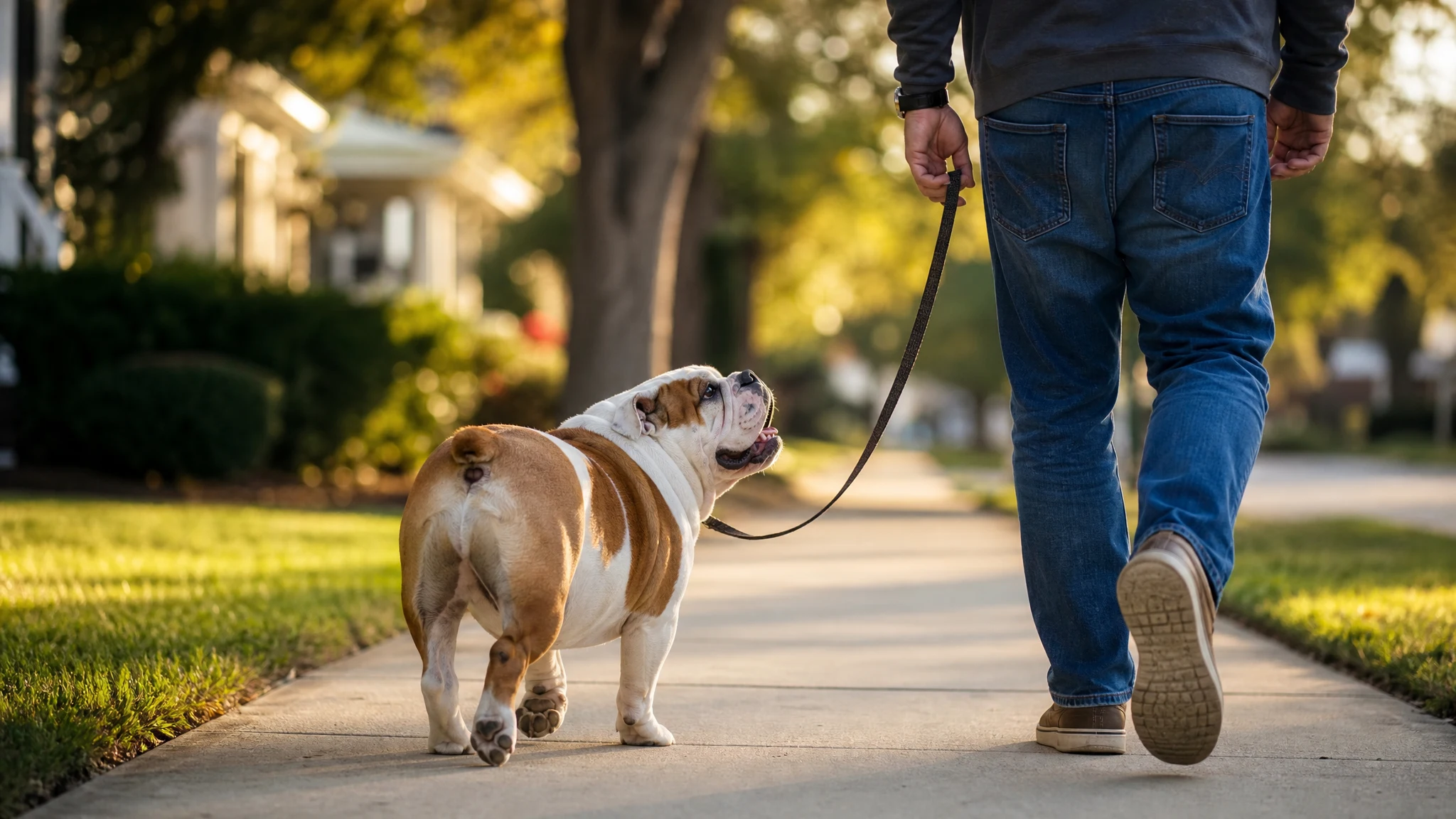
General training information. Every dog is an individual; for health or behavior concerns, see your veterinarian.
A Bulldog on a leash can look like a small tank with a mission. Some pull toward every smell, dog and stranger. Others plant their feet and refuse to move at all.
This guide covers English Bulldog leash training from the first indoor lesson to calmer walks outside. You will find the gear to use, a step-by-step plan, games that build loose-leash habits, and ways to handle lunging. Every dog is an individual, so treat the timing here as a guide, not a schedule.
One note on names. The Westminster Kennel Club lists the breed simply as the Bulldog, and the AKC uses the same name. Most people say English Bulldog, so that is what we use here.
Why Your English Bulldog May Pull
Pulling is normal dog behavior. A dog moves toward what interests it, and a tight leash has often been rewarded by letting the dog reach the thing it wanted. Every time that works, the habit gets stronger.
The Westminster Kennel Club describes the Bulldog as fun-loving, outgoing, playful and friendly. A friendly dog may be very excited to say hello to everyone on the block. That excitement can show up as pulling.
The breed's history is worth knowing too. The Bulldog Club of America says the breed began in 13th-century England, and Westminster notes the original purpose was bull baiting. We cannot say how that history shows up in any one dog, and individual Bulldogs vary a lot. Treat it as background, not an excuse.
Orvis, a retailer with a breed profile, lists stubbornness as a known challenge. Westminster rates trainability at 4 out of 5 and energy at 3 out of 5. In plain terms, many Bulldogs can learn well, but they may decide they would rather sit down and think about it.
Why pulling matters more for this breed
PetMD lists breathing problems among common Bulldog health issues and notes that the breed has trouble with heat. A dog that hauls against a leash may breathe harder, and a short, flat-faced dog has less room for error. If your dog gasps, snorts loudly, coughs or struggles on walks, talk to your veterinarian. Do not try to work through it with training alone.
Materials You Will Need
- A flat collar for identification tags. It works for light leash use on a dog that is not pulling hard.
- A well-fitted front-clip harness if your dog pulls. The leash attaches at the chest, so a forward lunge turns your dog gently back toward you. A harness also keeps pressure off the neck, which matters for a breed with breathing concerns. Ask your veterinarian or a reward-based trainer to check the fit.
- A standard 4 to 6 foot leash. Skip retractable leashes. They teach a dog that pulling extends the leash.
- Small, soft treats cut into pea-sized pieces. PetMD advises limiting treats during training to avoid weight gain, and obesity is on its list of common Bulldog health issues. Use a measured part of the daily food ration as rewards if your veterinarian agrees.
- A treat pouch so rewards are quick to reach.
- Water and a cool place to rest for after each session.
What to leave in the drawer: prong collars, choke collars and shock collars. These tools work by causing discomfort. The American Veterinary Society of Animal Behavior (AVSAB) supports reward-based training, and we do too. Leash jerks, alpha rolls and scruffing do not belong in training either.
How to Leash Train an English Bulldog: Step by Step
If you are wondering how to leash train an English Bulldog, the short answer is to start small, indoors, and pay your dog for being near you. Keep sessions short. Orvis advises short sessions with praise and rewards, and that fits a breed that tires and overheats easily.
Step 1: Make the gear a good thing
Let your dog sniff the harness and leash. Drop a treat each time. Then slip the harness on, feed a few treats, and take it off. Repeat over a few days until your dog looks happy when the harness appears.
Step 2: Teach your dog to check in
Indoors, say your dog's name. The moment your dog looks at you, say "yes" and give a treat. Do this ten or so times in a row. You are building the habit of looking to you, which is the base for everything outside.
Step 3: Reward the spot beside you
Clip on the leash in a quiet room. Pick a side and stay with it. Reward every time your dog is next to your leg with a slack leash. Reward right at your side, so your dog learns that spot is where the good things happen.
Step 4: Take a few steps
Walk three or four steps. If the leash stays loose, say "yes" and give a treat at your side. Keep the rate of treats high at the start. A dog earning a treat every few steps has little reason to pull.
Step 5: Stop when the leash goes tight
The moment the leash tightens, stop walking. Stand still and stay calm. Do not yank or scold. When your dog looks back or steps toward you and the leash slackens, say "yes," reward, and move on. Your dog learns that a tight leash means a pause and a slack leash means progress.
Step 6: Change direction
If your dog keeps drifting ahead, turn and walk the other way in a cheerful voice. When your dog follows, reward at your side. Turns teach your dog to keep an eye on where you are going.
Step 7: Move to the yard, then the street
Add distractions slowly. Go from the living room to the yard, then the driveway, then a quiet street. If your dog stops responding, you have moved too fast. Go back a step and make it easier.
Step 8: Thin out the treats
Once your dog walks nicely for longer stretches, reward every few steps, then every so often. Keep some rewards that are not food, such as permission to sniff a favorite bush. Never drop rewards altogether, because good habits need a reason to continue.
Loose-Leash Games That Help
Games make practice feel less like work. Keep each one brief.
- Follow me: Walk a zigzag path around the yard and reward your dog for keeping up. Change speed now and then.
- Treat scatter: Toss a few treats on the ground and let your dog sniff them out. Then call your dog back to your side for a reward. This teaches that leaving a smell and returning to you pays well.
- Red light, green light: Walk, then freeze. Reward your dog for stopping with you. Say "let's go" and walk on. A Bulldog that can stop on cue is easier to manage in tricky spots.
- Sniff break cue: Pick a word, such as "free," that means your dog may sniff and explore. Use it as a reward for walking nicely. Sniffing is satisfying for dogs, and a cue can keep it from becoming a tug of war.
Dealing With a Bulldog That Lunges
Lunging usually has a cause. The dog might be excited and want to greet, or nervous and want distance. The leash can make either feeling stronger, because the dog cannot move freely. Look at your own dog's body language to work out which it is.
Orvis says the breed can show possible dominance over family members or other pets. Westminster does not give a rating for how well Bulldogs get along with other dogs, and our sources do not settle that question. Check with your veterinarian or a reward-based trainer about your own dog, especially if the lunging comes with growling or stiff body language.
A simple plan for lunging
- Find your dog's threshold. This is the distance at which your dog notices a trigger, such as another dog, but can still take a treat and respond to you.
- Work at that distance. When your dog sees the trigger, say "yes" and give a treat. Keep the treats coming while the trigger is in view.
- Calmly leave if needed. If your dog tenses or starts to pull, turn and walk away. Do not drag the dog. Use a happy voice and a treat to help your dog follow.
- Close the gap slowly. Over many sessions, you may be able to get a bit closer. If your dog gets worked up, go back to the easier distance.
- Plan your route. Cross the street, step behind a parked car or choose quieter times of day while your dog learns.
If your dog lunges hard, or the behavior seems to come from fear or aggression, ask your veterinarian for a referral to a qualified reward-based trainer or veterinary behaviorist. Pain can also cause leash reactions, so a health check is a sensible first step.
Walk Length, Weather and Safety
PetMD says Bulldogs need gentle exercise only, with short leashed walks in a cool environment. Orvis says a 20-minute walk is usually enough. Many owners walk in the early morning or evening in warm weather.
Stop for a rest if your dog slows down, pants heavily or lags behind. Offer water in the shade. Heat is a real concern for this breed according to PetMD, so call your veterinarian if you are worried about your dog's breathing or temperature.
Training sessions do not need to add to the walk. Practice for a few minutes in the yard, then reward and end on a good note.
Tips for Better Walks
- Practice before meals, when your dog is more interested in treats.
- Use a calm, upbeat voice. Excited chatter can wind your dog up.
- Be consistent. If one family member lets the dog pull, progress may slow.
- Stand still and wait. It feels slow, but patience often pays off with a stubborn dog.
- Keep a loose leash yourself. Gripping tight can encourage your dog to lean into it.
- Watch your dog's weight. Count training treats as part of the daily food.
Common Mistakes to Avoid
- Letting the dog pull to the goal. If pulling gets your dog to the park, pulling works. Wait for a slack leash before moving on.
- Using harsh tools or leash pops. These can hurt, and they can make a dog fearful of walks. They are also hard on a breed with breathing concerns.
- Going too far, too fast. A long walk on a warm day is a poor place to practice.
- Training only on walks. Short practice at home makes outdoor behavior easier.
- Using too many treats. Use tiny pieces and keep them part of the daily food.
- Dragging a dog that sits down. A Bulldog that stops may be tired, hot or unsure. Pause, check how your dog is doing, and make the next steps easy and rewarding.
- Skipping vet advice. If your dog struggles to breathe on walks, see your veterinarian before more training.
What Results to Expect
With regular, short practice, many owners find their Bulldog walks more calmly over several weeks. Results vary with age, history, distractions and how consistent everyone in the house is. Puppies may learn quickly but are easily distracted. Adult dogs with a long habit of pulling may need more time.
Progress is rarely a straight line. Expect good days and bad ones. Lunging can take longer to improve than ordinary pulling, and some dogs may always need extra space around certain triggers. Small gains, such as a dog that checks in more often, are worth celebrating.
Training may not fix everything, and no method can promise a particular result. If you feel stuck, a reward-based trainer can watch you and your dog together and offer tailored advice.
Beyond the Walk
Leash manners are a good base for other activities. The Bulldog Club of America lists obedience, agility trials, rally trials, scent work, field events and tracking trials as activities for the breed. Not every Bulldog will enjoy or be able to do all of them, and your veterinarian can help you decide what suits your dog's body and stamina. For breed-specific questions, the Bulldog Club of America is a good place to start.