How to Potty Train a English Bulldog Puppy
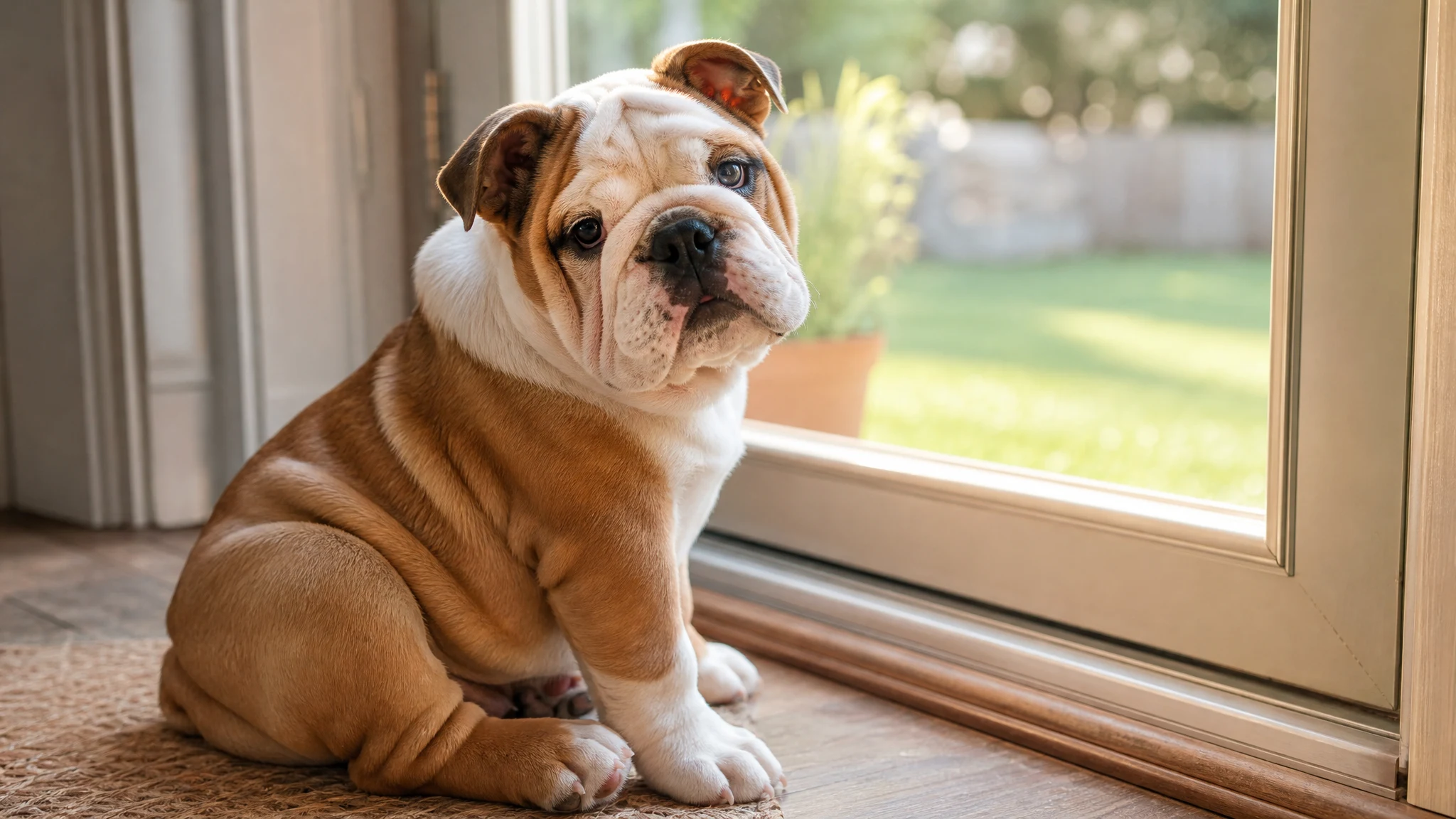
General training information. Every dog is an individual; for health or behavior concerns, see your veterinarian.
English Bulldog potty training is mostly about routine. Your puppy needs a predictable day, a spot to go, and a lot of calm praise when they get it right. Do those three things consistently and most families see steady progress.
This guide covers a schedule-based plan, crate use, what to do after accidents, and a few things that are specific to the breed. Every puppy is different, so treat the steps as a framework you can adjust.
What the breed brings to house training
The Westminster Kennel Club describes the Bulldog (the name the AKC and Westminster use for the breed) as fun-loving, affectionate and well-rounded. Westminster rates trainability at 4 out of 5, which is a good sign for house training.
Orvis, a retailer and a secondary source, notes that the breed can be stubborn. That fits what many Bulldog owners describe. A Bulldog puppy may understand what you want and still take their time about it. Patience and short, happy sessions work better than pressure.
PetMD, a veterinary reference, says positive reinforcement works best for the breed. It also advises limiting treats during training to avoid weight gain, and obesity is one of the health issues PetMD lists for Bulldogs. Keep that in mind when you plan rewards.
Materials you will need
- A crate sized so your puppy can stand, turn around and lie down comfortably, without much extra room.
- A flat collar or harness and a standard leash for taking your puppy to the potty spot every time.
- Small, soft treats that you can break into tiny pieces. You can also use part of your puppy's regular meal as the reward.
- An enzyme-based cleaner made for pet messes, to remove odor from indoor accidents so the spot does not smell like a bathroom.
- A playpen or baby gate to keep your puppy in a small, supervised area.
- A notebook or phone notes to track meals, naps, potty trips and accidents.
- A cue word such as "go potty," used the same way by everyone in the home.
Step-by-step: how to potty train an English Bulldog puppy
Step 1: Pick one potty spot
Choose a patch of yard or a spot on your walk route and use it every time. The same smells and surfaces help your puppy connect the place with the job.
Carry your puppy if the distance is long or the floor is slippery. Then set them down at the spot and stand quietly. Do not play yet.
Step 2: Set a feeding schedule
What goes in on a schedule comes out on a schedule. PetMD says Bulldog puppies need to eat more often than adult dogs, three or four times daily. Ask your veterinarian what amount and food are right for your puppy, since the answer depends on age, weight and health.
Feed at the same times each day. Pick up the bowl after a short mealtime so you can predict when your puppy will need to go.
Step 3: Build a potty-trip routine
Take your puppy out at these moments, every time:
- First thing in the morning, before anything else
- Shortly after each meal
- After waking from any nap
- After a play session or excited greeting
- Right before bed
- Regularly through the day, often every hour or two for a young puppy, and then a little less often as your puppy matures
I cannot give you an exact bladder timeline for the breed, because the sources I rely on do not state one. Your veterinarian can tell you how long your own puppy can reasonably wait at their age. When in doubt, go out sooner.
Step 4: Reward right away
When your puppy goes in the right spot, say your cue word in a calm voice and give a treat and praise immediately. Timing matters. A reward that arrives after your puppy walks back to the door teaches them the wrong lesson.
Save the real celebration and a bit of play until after they finish. Otherwise some puppies learn that going potty ends the fun, and they start holding it.
Step 5: Use the crate as a resting place
Most dogs avoid soiling the place where they sleep, so a properly sized crate can help. Make it comfortable and positive with a soft bed, a safe chew and treats tossed inside. Never use it as punishment.
Take your puppy straight from the crate to the potty spot. Do not let them wander first. Young puppies cannot wait long, so a crate is not a place to leave a puppy for hours. If you will be away longer than your puppy can manage, arrange for someone to give a potty break, or use a small playpen setup. Ask your veterinarian or a reward-based trainer to help you work out safe crate times for your puppy's age.
Step 6: Supervise when your puppy is loose
When the puppy is out of the crate, keep them in sight. Use a leash tied to you, a gate or a playpen. Watch for early signals such as sniffing the floor, circling, wandering off or suddenly stopping play.
When you see a signal, calmly take your puppy outside. Many accidents are really supervision gaps, not training failures.
Step 7: Handle accidents without punishment
Accidents will happen. When one does, stay calm. If you catch your puppy in the act, make a small interruption sound, then scoop them up and take them to the potty spot. Praise if they finish there.
If you find the mess later, simply clean it up. Your puppy cannot connect a scolding to something that happened minutes ago. Punishment can make a puppy nervous about going in front of you, which makes outdoor training harder.
The American Veterinary Society of Animal Behavior (AVSAB) supports humane, reward-based training, and that is the approach here. Never rub a puppy's nose in a mess, shout, or use physical corrections.
Step 8: Add freedom slowly
After your puppy has gone a good stretch with no accidents, let them have a little more room, one area at a time. If accidents return, go back a step. Moving backward is a normal part of the process, not a failure.
A sample daily schedule
Adjust the times to your household. The order matters more than the clock.
| When | What happens |
|---|---|
| On waking | Straight outside to the potty spot, then breakfast |
| After breakfast | Potty trip, then short supervised play |
| Mid-morning | Potty trip, then nap in the crate or playpen |
| After each nap | Potty trip right away |
| Midday meal | Meal, then a potty trip |
| Afternoon | Potty trips between play and naps |
| Evening meal | Meal, potty trip, a calm walk if the weather is cool |
| Before bed | Last potty trip, then crate |
Because PetMD says puppies eat three or four times daily, the meal slots above may need one more, depending on your veterinarian's advice.
Breed-specific tips
Protect your puppy from heat and strain
PetMD notes that Bulldogs have trouble with heat because they are a brachycephalic (short-nosed) breed. It also lists breathing problems among the common health issues. Potty trips should be quick and comfortable.
On hot days, go out in the cooler parts of the morning and evening, offer shade and water, and keep trips short. If your puppy seems to struggle to breathe, call your veterinarian. Do not try to diagnose it yourself.
Keep sessions short and upbeat
Orvis recommends short sessions with praise and rewards for the breed. That suits potty training well. A calm, cheerful trip outside, a treat, and then back to the day is plenty.
Expect some stubbornness
If your puppy plants their feet or refuses to move, do not drag or pull. Use a treat to lure them, or carry them to the spot. Stay neutral, wait a few minutes, and try again. Frustration on your end tends to slow things down.
Watch the treat count
Because PetMD flags obesity as a concern, count training treats as part of the day's food. Tiny pieces, praise and a favorite game all work as rewards.
Mind the size and the surfaces
Westminster lists the Bulldog at up to 15 inches tall, and PetMD gives a weight of 40 to 50 pounds for adults. Puppies are small at first, so stairs and slick floors can be awkward on the way to the door. Carry your puppy when needed so urgent trips do not turn into slips.
Common mistakes to avoid
- Waiting for your puppy to ask. Young puppies often give little warning. Go on your schedule.
- Changing the routine. Different spots, different cue words and different people doing things differently all slow progress.
- Punishing accidents. This can teach a puppy to hide, not to go outside.
- Using a poor cleaner. If the smell lingers, the puppy may return to the spot.
- Too much freedom, too soon. Give space only as your puppy earns it.
- Playing before they finish. Wait to play until after they have gone.
- Overusing treats. Cut them small and adjust meals.
- Ignoring frequent accidents. If your puppy has many accidents, strains, or seems to urinate far more than expected, ask your veterinarian. A health issue could be involved.
What results to expect
Many puppies make steady progress over several weeks of consistent routines, and some take longer. I cannot give an exact timeline for the breed, because the sources I rely on do not state one. Age, schedule, household routine and the individual dog all play a part.
With patience and a steady routine, you may see fewer accidents over time, longer stretches between trips, and a puppy who starts heading to the door. Occasional slips can still happen as your puppy grows or when routines change. If you are stuck, a reward-based trainer or your veterinarian can help you troubleshoot.
Westminster rates the breed 4 out of 5 for trainability, which is encouraging. Still, individual dogs vary, and no method can promise a specific outcome.
Quick recap
- Choose one potty spot and one cue word.
- Feed on a schedule, following your veterinarian's advice.
- Take your puppy out after meals, naps, play and before bed.
- Reward immediately, then play afterward.
- Use a properly sized crate as a comfortable resting place.
- Supervise whenever your puppy is loose.
- Clean accidents calmly, with no punishment.
- Add freedom slowly, and back up a step if needed.
For breed-specific questions, the Bulldog Club of America is a good place to start. For questions about your puppy's health, bladder or breathing, talk with your veterinarian.