Crate Training a English Bulldog and Preventing Separation Anxiety
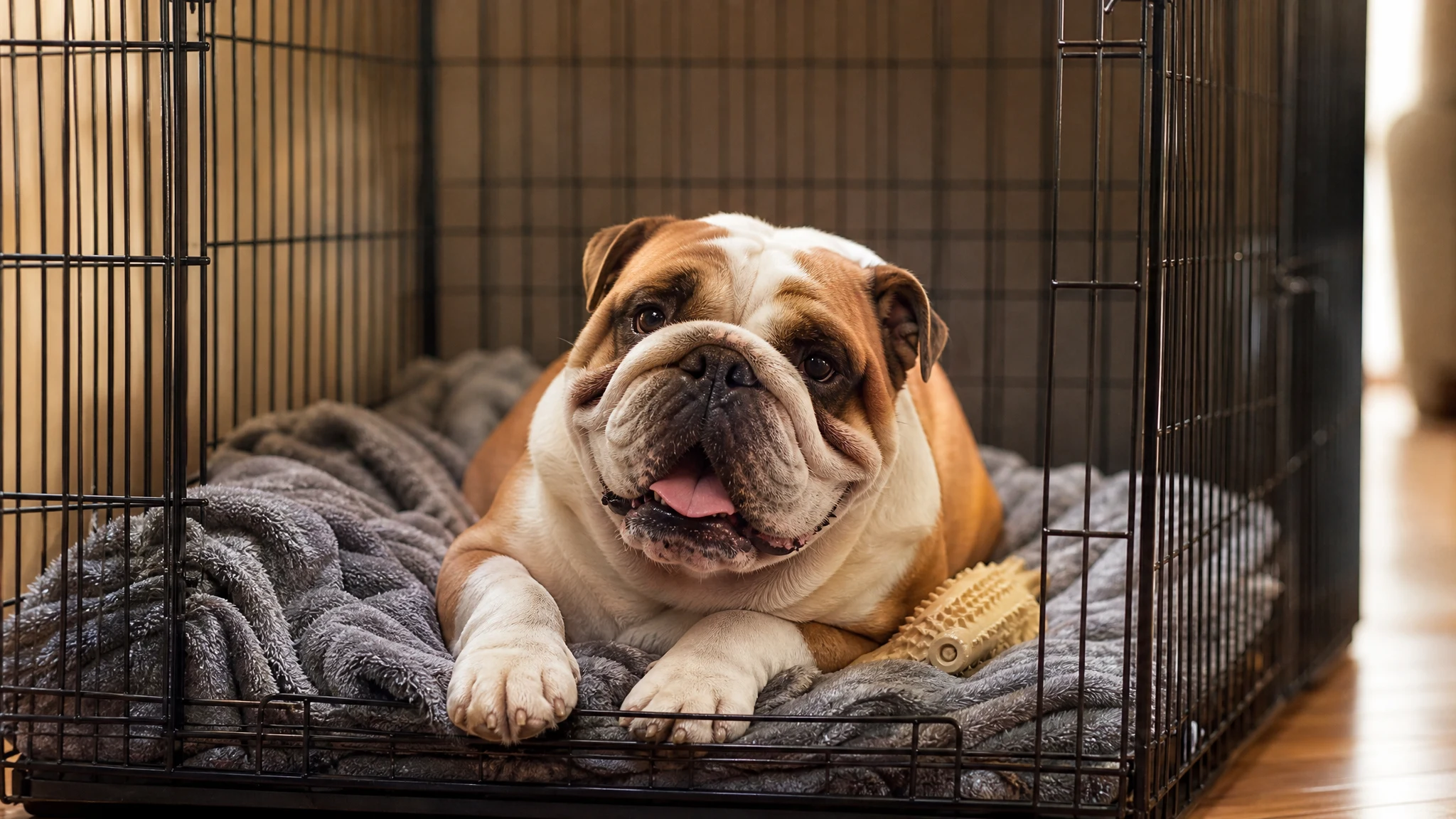
General training information. Every dog is an individual; for health or behavior concerns, see your veterinarian.
A crate can become your dog's quiet room, a safe place to rest and a tool that makes travel and vet visits easier. English Bulldog crate training works best when it is slow, calm and built on rewards. It also helps prevent the panic some dogs feel when they are left alone.
One note on names. The Westminster Kennel Club calls the breed simply "Bulldog," and so does the AKC. Most people say English Bulldog, so that is what we use here.
Why Crate Training Suits This Breed
Westminster describes the Bulldog as fun-loving, affectionate and well-rounded, and rates trainability at 4 out of 5. PetMD says positive reinforcement works best with the breed. That is good news for crate work, which depends on patience and rewards.
Orvis, a retailer's breed page, mentions stubbornness as a known challenge. Every dog is an individual, so expect some dogs to take to the crate quickly and others to need more time. Short, upbeat sessions tend to help.
Two things shape how you set up a crate for this breed. PetMD lists heat intolerance and breathing problems among the Bulldog's health concerns. So the crate's location and airflow matter as much as the training itself.
Materials You Will Need
- A crate sized for your dog (see the next section).
- A firm, washable mat or bed that fits the floor of the crate.
- Small, soft treats. PetMD advises limiting treats during training to avoid weight gain, so use tiny pieces and count them as part of the daily food.
- A safe chew or food-stuffed toy your veterinarian is comfortable with for your dog.
- A leash and a water bowl for breaks.
- A cool, well-ventilated spot for the crate, away from direct sun and heaters.
Choosing the Right Crate Size
Westminster lists the Bulldog at up to 15 inches tall, and PetMD gives 14 to 15 inches at the shoulder. PetMD gives the weight as 40 to 50 pounds. Those are adult figures, so a puppy will start well below them.
Brands label sizes differently, and we do not have a verified chart for any of them. Check the maker's sizing guide against your dog's current weight and height. Then use this simple rule: your dog should be able to stand up, turn around and lie down comfortably.
A crate that is too small is stressful. A crate that is far too big can feel less like a den. Some crates come with a divider panel, which lets you give a growing puppy more room over time.
Choose good airflow. Wire crates let air move freely, which suits a breed that PetMD says struggles with heat. If you prefer a plastic travel crate, check that it has plenty of ventilation. Ask your veterinarian if you are unsure which type is safest for your dog.
Step-by-Step: Crate Training a English Bulldog
Step 1: Set up a comfortable, cool space
Place the crate in a room where the family spends time, such as the living room. Put the mat inside and leave the door propped open. Keep the area cool and out of the sun.
Never use the crate as punishment. If your dog links it with scolding, the whole plan gets harder.
Step 2: Let your dog explore on their own terms
Toss a few treats near the crate, then just inside the door, then toward the back. Let your dog walk in, eat and walk out. Praise calmly.
Do not push or lift your dog inside. Several short, happy sessions each day are better than one long one. Orvis also advises short sessions with praise and rewards.
Step 3: Feed meals near and then in the crate
Put the food bowl near the crate door. Over several days, move it farther in. When your dog is comfortable eating at the back, you can close the door for the length of the meal. Open it as soon as the bowl is empty.
PetMD notes that puppies need to eat more often, three or four times daily. Those regular mealtimes give you plenty of natural chances to practice.
Step 4: Add a cue and short door-closed moments
Pick a simple word such as "bed" or "crate." Say it once, toss a treat in, and praise when your dog steps inside. Then close the door for a few seconds while you sit nearby, reward through the door, and open it before your dog gets upset.
Build the time slowly: a few seconds, then half a minute, then a couple of minutes. If your dog whines, you went too fast. Go back a step and make the next try easier.
Step 5: Practice while you are in the room
Once your dog relaxes with the door closed, give a safe chew and sit quietly nearby. Read a book. Make it boring. The goal is a dog who treats the crate as a normal place to settle.
Step 6: Step away briefly
Walk to another room and come back before your dog fusses. Keep arrivals and departures low-key. A big fuss on leaving or returning can make being alone feel like a big event.
Step 7: Build alone time gradually
Start with a few minutes out of sight, then lengthen the gaps over days and weeks. Vary the pattern so your dog does not learn that a longer absence always follows a certain routine.
Eventually you can step outside, then take a short trip. Take your time. Rushing alone time is the most common way to create distress.
Step 8: Keep exercise gentle and timed well
PetMD describes the breed's exercise needs as gentle, with short leashed walks in a cool environment. Orvis says a 20-minute walk is usually enough. A calm walk and a bathroom break before crate time can help your dog settle.
Avoid hard exercise right before or after crate time, especially in warm weather.
Preventing Separation Anxiety
Crate training and English Bulldog separation anxiety are connected, but a crate does not fix anxiety on its own. A dog who is already panicked in the crate may be more distressed, not less. The best prevention is teaching your dog, early and gently, that being alone is safe and predictable.
- Practice short absences every day, even when you are home.
- Give your dog a quiet rest spot and encourage naps there while you are busy nearby.
- Keep departures and returns calm.
- Offer a safe chew or food toy only when you leave, so it becomes a signal for something pleasant.
- Keep your daily routine steady, with regular meals, walks and rest.
Westminster describes the breed as affectionate and friendly. Dogs who love their people may find time apart harder, but individual dogs vary, so watch your own dog rather than assuming.
Signs of Separation Distress
Watch for these signs when you leave your dog, or when you build alone time in the crate:
- Constant barking, howling or whining that does not settle.
- Frantic scratching or chewing at the crate door or bars.
- Drooling, panting or pacing that is out of character, especially in a cool room.
- Accidents in the crate from a dog who is normally clean.
- Refusing food or treats when left alone.
- Extreme excitement or clinging when you come back.
Westminster gives the breed's barking level as 2 out of 5, so ongoing, intense vocalizing may be a sign worth taking seriously. A little complaining at the start of crate training is common and not the same thing as panic.
If you see signs of distress, stop the current step and go back to the last point where your dog was relaxed. Do not leave a panicking dog to cry it out.
When to See a Veterinarian
Call your veterinarian if your dog shows heavy panting, noisy or labored breathing, collapse, or any sign of overheating in or out of the crate. PetMD lists breathing problems and heat intolerance among the breed's concerns, so treat these as urgent.
Also call if your dog has repeated accidents, stops eating, injures themselves trying to get out of the crate, or seems very distressed when alone. Some of these signs can come from health problems, not only from anxiety, and only a veterinarian can tell the difference.
If your veterinarian suspects an anxiety problem, ask about a referral to a qualified professional who uses reward-based methods in line with the American Veterinary Society of Animal Behavior. We do not give medication or supplement advice here, so leave that to your veterinarian.
Tips and Common Mistakes
Helpful tips
- Keep sessions short and end on a good note.
- Use tiny treats and adjust meals so training does not add weight. PetMD lists obesity among the breed's common health issues.
- Check the room temperature before every crate session.
- Be consistent. Everyone in the house should use the same cue and rules.
Common mistakes
- Going too fast. Long stays before your dog is ready lead to stress.
- Using the crate as punishment. This undermines trust.
- Letting a crying dog out mid-panic. Wait for a calm moment, even a brief one, when you can. If your dog is truly frantic, end the session gently and go back a step.
- Crating in a hot spot. Sun, stuffy rooms and parked cars are dangerous for a heat-sensitive breed.
- Skipping the veterinarian. Do not assume every behavior problem is training.
- Relying on harsh tools or dominance ideas. Orvis mentions possible dominance toward family members or other pets. Even so, we do not recommend alpha rolls, scruffing, shock, prong or choke collars. These are not part of humane training and can make fear and anxiety worse.
What to Expect
Many dogs can learn to accept and even enjoy a crate with steady, reward-based practice, but the pace varies. Some dogs may settle within days. Others may need weeks of small steps. Neither is a sign you are doing it wrong.
With patient practice, your dog may become calmer when left alone, and you may find it easier to prevent distress from building. Results are not guaranteed, and a dog who struggles despite good practice should be seen by a veterinarian.
Be especially patient with a puppy. PetMD says puppies need frequent meals, so plan your day around regular bathroom breaks and short crate rests, not long stretches.
For breed-specific questions, the Bulldog Club of America is the parent club and a good place to ask. Check with them or your veterinarian for advice on your own dog.